Left-Handed Typing: Do Lefties Need a Different Approach?
Does being left-handed change how you should learn to type? A clear-eyed look at what actually differs for lefties on a keyboard, what does not, and the small adjustments that genuinely help.
Typing tips, exam preparation guides, and product updates from the Simple Typing team.
Does being left-handed change how you should learn to type? A clear-eyed look at what actually differs for lefties on a keyboard, what does not, and the small adjustments that genuinely help.
QWERTY was not designed to slow typists down. Here is the real story of how it was built, why the "slow-typist myth" took hold, and why it still beats every rival layout today.
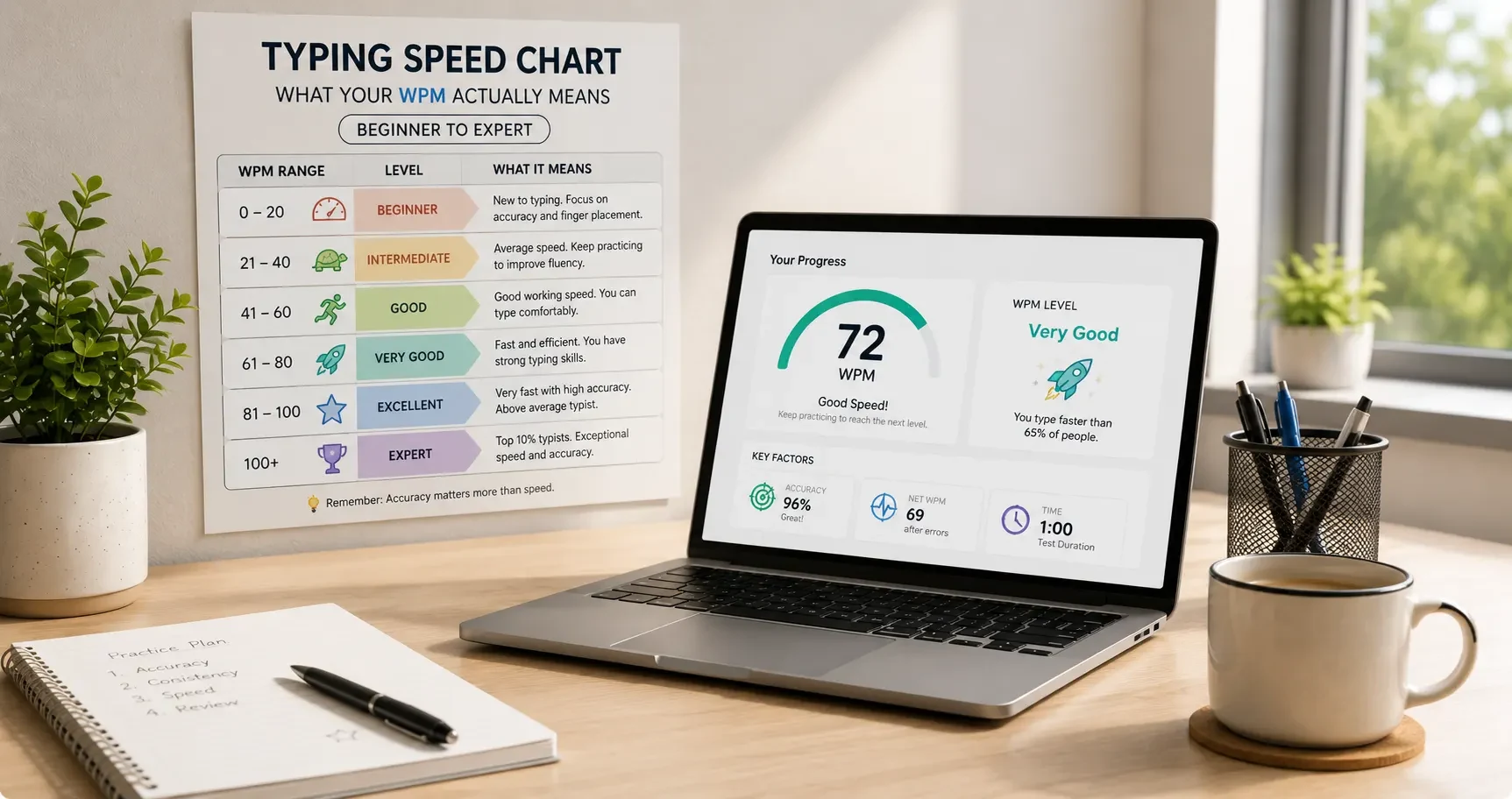
A straight-talking WPM classification chart that tells you exactly what your typing speed means in real-world terms, from complete beginner to court-reporter-level elite.
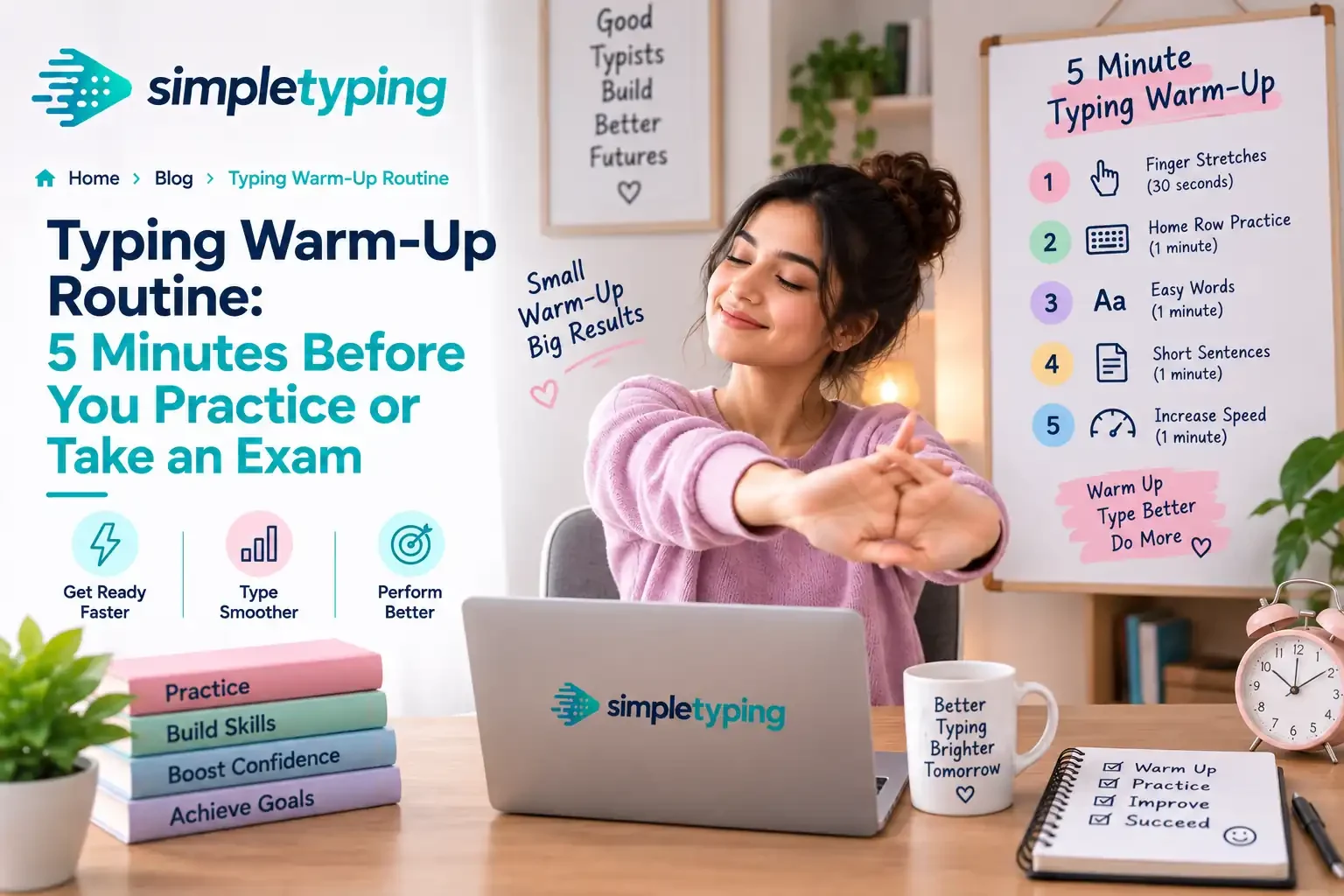
Cold fingers and a cold brain cost you WPM and accuracy in the first minute of any typing test. Here is a concrete 5-minute warm-up routine, and how it should change on exam day.
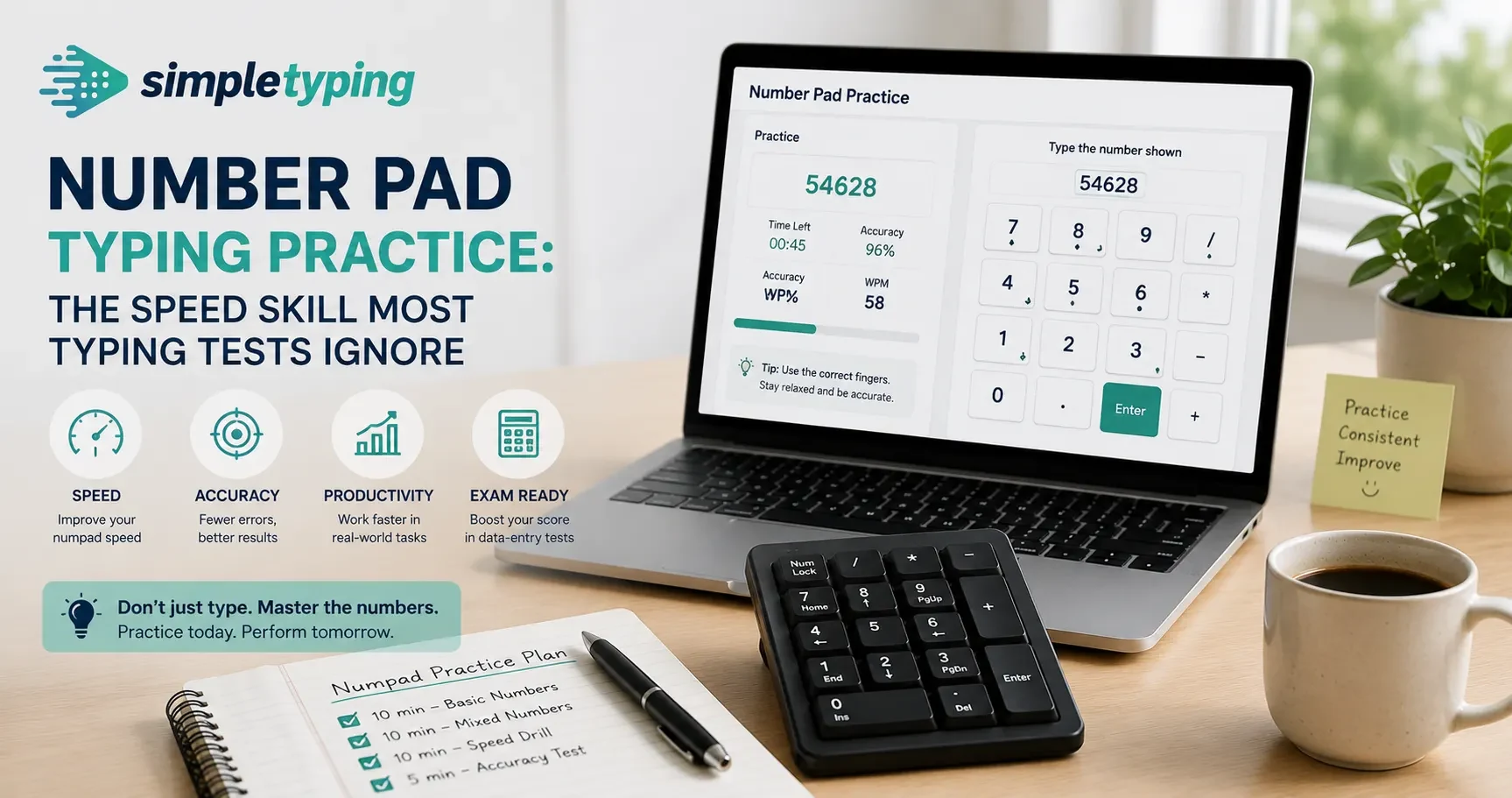
Alphabet WPM says nothing about how fast you can enter numbers. Here is why numpad speed is a separate skill, the real KPH benchmarks employers use, and how to train it.
How fast two-finger typing can realistically get, what it actually costs you, and a practical self-test to decide whether to switch to touch typing or just get better at what you already do.
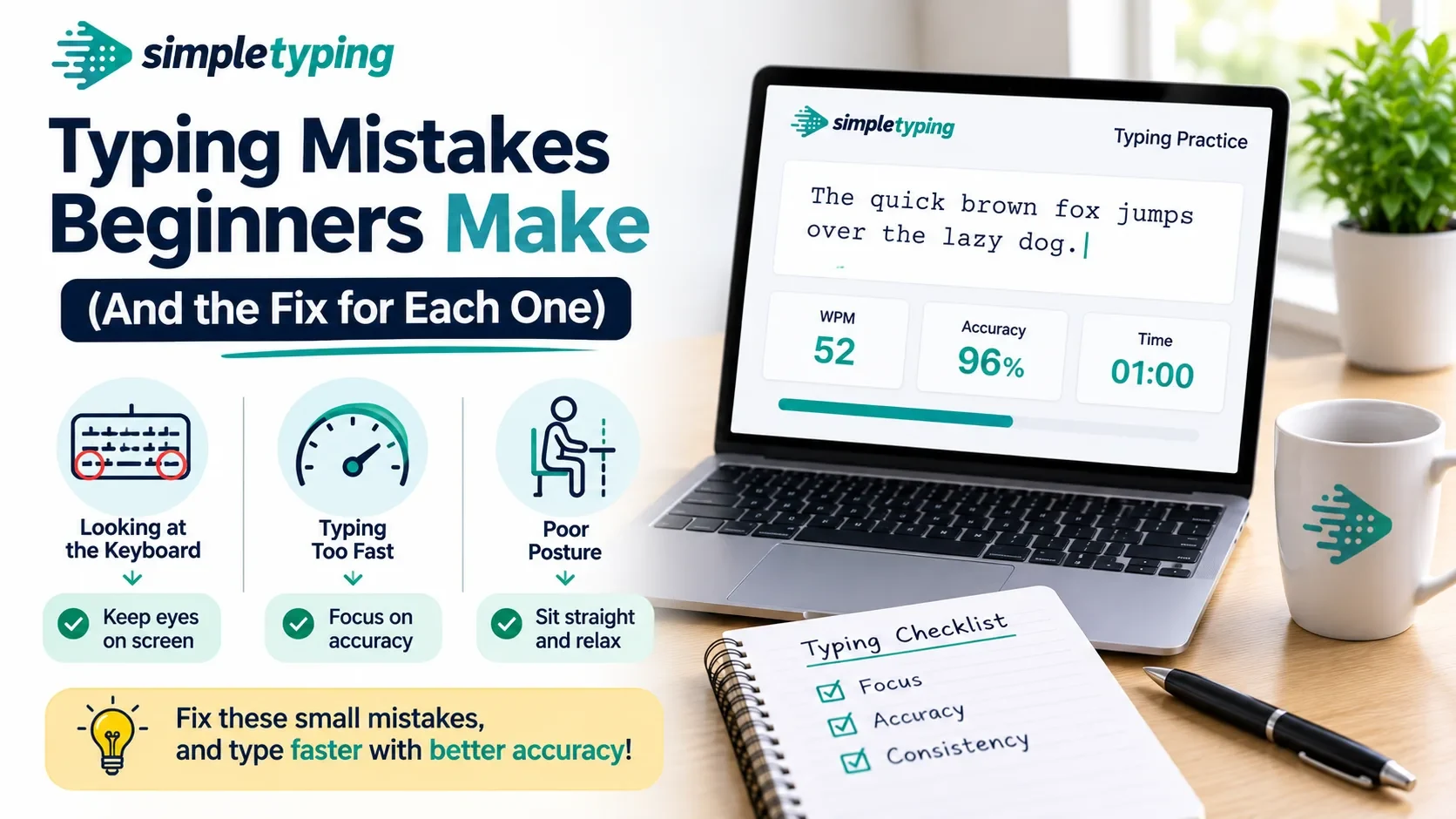
Nine specific technique mistakes beginners make while learning to type, from resting wrists on the desk to over-correcting every typo, each with the symptom, the cause, and the exact fix.
Paid typing test platforms promise deeper analytics, ad-free screens, and official-looking certificates — but strip away the marketing and most of it is the same WPM formula behind a paywall. Here is what actually differs.
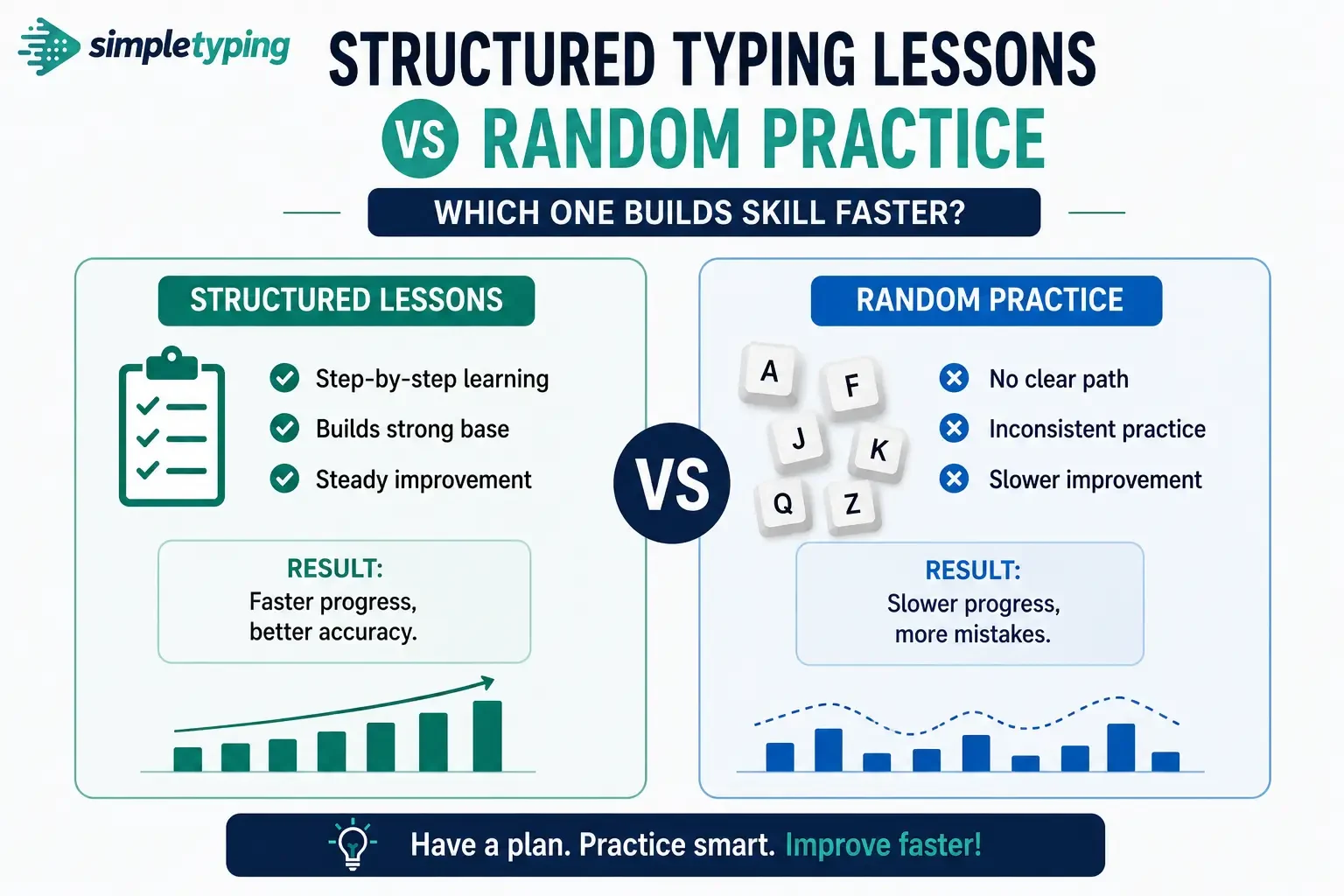
Structured typing lessons and unstructured random practice build skill in very different ways — one is slower but safer, the other feels faster but caps out early. Here is which wins at each stage, with real outcomes from both.
Our blog covers everything from typing speed tips and touch typing lessons for beginners to in-depth government exam typing preparation guides for SSC, RRB, and CPCT aspirants. Learn keyboard shortcuts, common mistakes that slow down your WPM, and practical daily typing practice routines to increase typing speed over time.
The Simple Typing blog brings together useful articles for people who want to learn more about typing, keyboard practice, speed improvement, and computer-based examinations. The articles are written around practical questions that learners and exam candidates commonly face while preparing or building their keyboard skills.
You can find guides covering typing techniques, practice habits, keyboard layouts, government exam preparation, typing tests, productivity, and other topics connected with everyday computer use. Each article focuses on a specific subject so you can choose the information that is most useful for your current goal.
Whether you are learning to type from the beginning, preparing for a typing-based recruitment test, or simply looking for better ways to practise, the blog provides another place to learn outside your regular typing sessions.
Different learners need different kinds of information. Our blog covers several areas so you can move directly toward the topic that matches your current typing or exam preparation needs.
Learn about keyboard habits, typing methods, practice ideas, and ways to become more comfortable while typing.
Explore information that can help candidates understand and prepare for typing-related government examinations.
Discover useful information about keyboards, layouts, shortcuts, and everyday computer typing.
Find practical ideas for making regular typing practice more useful, organised, and interesting.
Reading about typing is most useful when you can connect what you learn with actual practice. An article may introduce a technique, explain a keyboard concept, or describe a preparation method, while a practical typing session gives you an opportunity to apply that information.
You can therefore use the Simple Typing blog as a supporting resource rather than replacing hands-on practice. Read an article that matches a problem you are facing, note the useful ideas, and then return to your typing exercises to put them into practice.
This approach also allows you to learn gradually. You do not need to read every article at once. Choose topics that are relevant to your current level, preparation stage, or interest and explore additional guides when you need them.
Articles about practice methods can help you understand how different exercises fit into a regular typing routine and how to make your available practice time more useful.
Exam-focused articles can explain important preparation areas, common requirements, and practical considerations that candidates may want to understand before their examination.
Learning about keyboard habits can help beginners understand comfortable typing practices and avoid relying entirely on inefficient methods.
Educational articles can explain common typing measurements and help you understand what different results mean during practice.
Typing knowledge develops over time, so the questions you have at the beginning may be different from the questions you have after several weeks of practice. A useful blog should support that journey with information for different stages of learning.
Learn about keyboard familiarity, basic typing concepts, practice routines, and simple ways to begin learning.
Explore ideas for maintaining regular practice and dealing with common challenges as your experience grows.
Read exam-related guides when your typing practice becomes part of a larger competitive examination preparation plan.
Typing is not limited to practice websites or competitive examinations. People use keyboards every day to write messages, prepare documents, complete forms, search for information, create reports, communicate online, and work with different computer applications.
Developing comfortable keyboard habits can therefore be useful beyond a particular test. The ability to enter text accurately and comfortably can make many ordinary computer tasks easier to manage.
The Simple Typing blog covers topics connected with this wider use of typing as well as dedicated exam preparation. This gives readers an opportunity to explore both practical keyboard knowledge and structured typing practice.
Learning to type is an ongoing process, and there is always another area to explore. One article may answer a question about keyboard technique, another may explain an examination requirement, and another may introduce a new way to organise your practice.
The Simple Typing blog is intended to grow alongside the rest of the platform. As you continue practising, you can return to the blog for new articles and different perspectives on typing, computer skills, and examination preparation.
Choose an article that interests you, learn something useful, and then apply it during your next practice session. Combining useful reading with regular hands-on practice can make your learning journey more structured and purposeful.
Find quick answers about the articles and topics covered on the blog.